Central Kalahari Game Reserve: Botswana’s Untamed Heartbeat – A 2026 Safari Guide
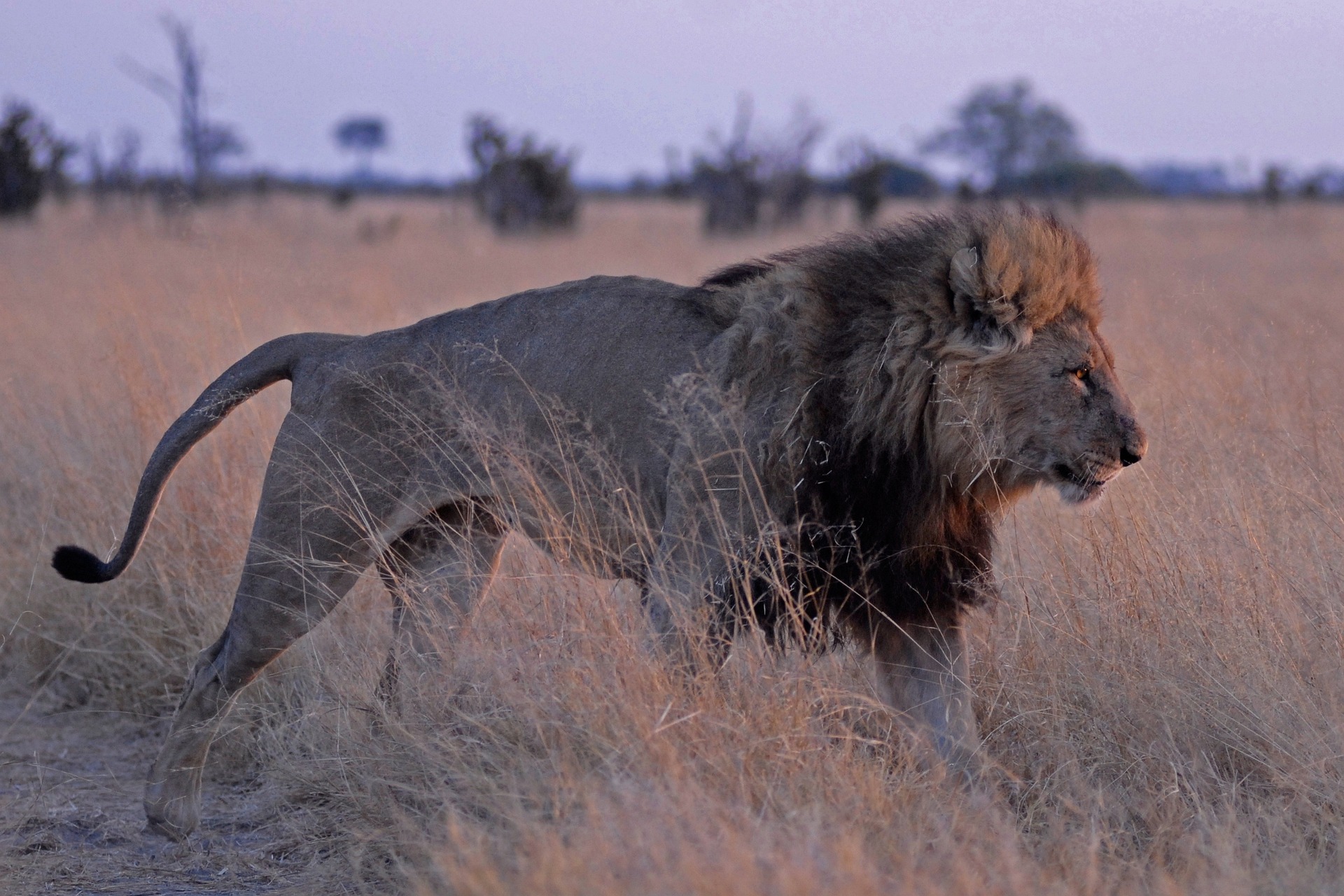
Quick answer: The Central Kalahari Game Reserve is Africa’s most remote safari experience, a vast, untamed wilderness the size of Denmark, where black-maned lions stalk the dunes, ancient camelthorn trees dot the horizon, and the silence stretches further than the eye can see. This is not a safari for the casual traveler. It is for those who seek true isolation, raw nature, and the profound peace of a land unchanged for millennia.
There is a place in Botswana where the roads fade to sand tracks, where the nearest vehicle might be a day away, and where the night sky spills across the horizon with no light to dim it. This is the Central Kalahari Game Reserve, the second largest protected area on Earth, yet one of the least visited. In a world where “wilderness” is often a marketing term, here it remains a living truth.
For 2026, if you’ve dreamed of a safari where you share sightings with no one, where the Kalahari’s famous black-maned lions roam territories the size of small countries, and where you can stand in the middle of an ancient lakebed and feel utterly small beneath the stars — this is your destination.
Already exploring Botswana? Our guides to Okavango Delta and Chobe National Park offer very different experiences. The Central Kalahari is something else entirely — wilder, quieter, more ancient.
Why the Central Kalahari Game Reserve Stands Alone
If the Okavango Delta is Botswana’s watery heart, the Central Kalahari is its ancient soul. Covering over 52,000 square kilometers , roughly the size of Denmark, this is the largest game reserve in Africa and the second largest protected area in the world. But numbers don’t capture what makes it extraordinary.
This is a landscape of extremes. During the dry season (May–October), the Kalahari is a vast, parched expanse of fossilized dunes, golden grasslands, and camelthorn forests. Animals gather around the few permanent water sources, creating some of the most concentrated and dramatic predator-prey interactions on the continent. When the summer rains arrive (November–April), the desert transforms into a lush paradise, with pans filling with water, migratory birds arriving, and antelope giving birth across the green plains.
What you won’t find here are crowds. The Central Kalahari Game Reserve has strict visitor limits, and most of the reserve sees fewer than a thousand travelers a year. This is a place where you can spend an entire day following lion tracks without seeing another vehicle. Where the only sounds are the wind through the grass, the call of a korhaan, and the distant roar of a lion at dusk.
The Wildlife of the Kalahari: Lions, Gemsbok, and Ancient Survivors
Black-Maned Lions: The Kings of the Kalahari
The Central Kalahari is famous for its lions, specifically the legendary black-maned males that have become symbols of African wilderness. These are not the lions of the Serengeti or the Okavango. Here, in the harsh conditions of the Kalahari, prides have adapted to survive in one of the most unforgiving environments on Earth. They range over enormous territories, sometimes covering 50 kilometers in a single night. To see a black-maned lion silhouetted against a Kalahari sunrise, mane glowing gold and black in the first light, is to witness something primal and unforgettable.
Gemsbok: The Spirits of the Desert
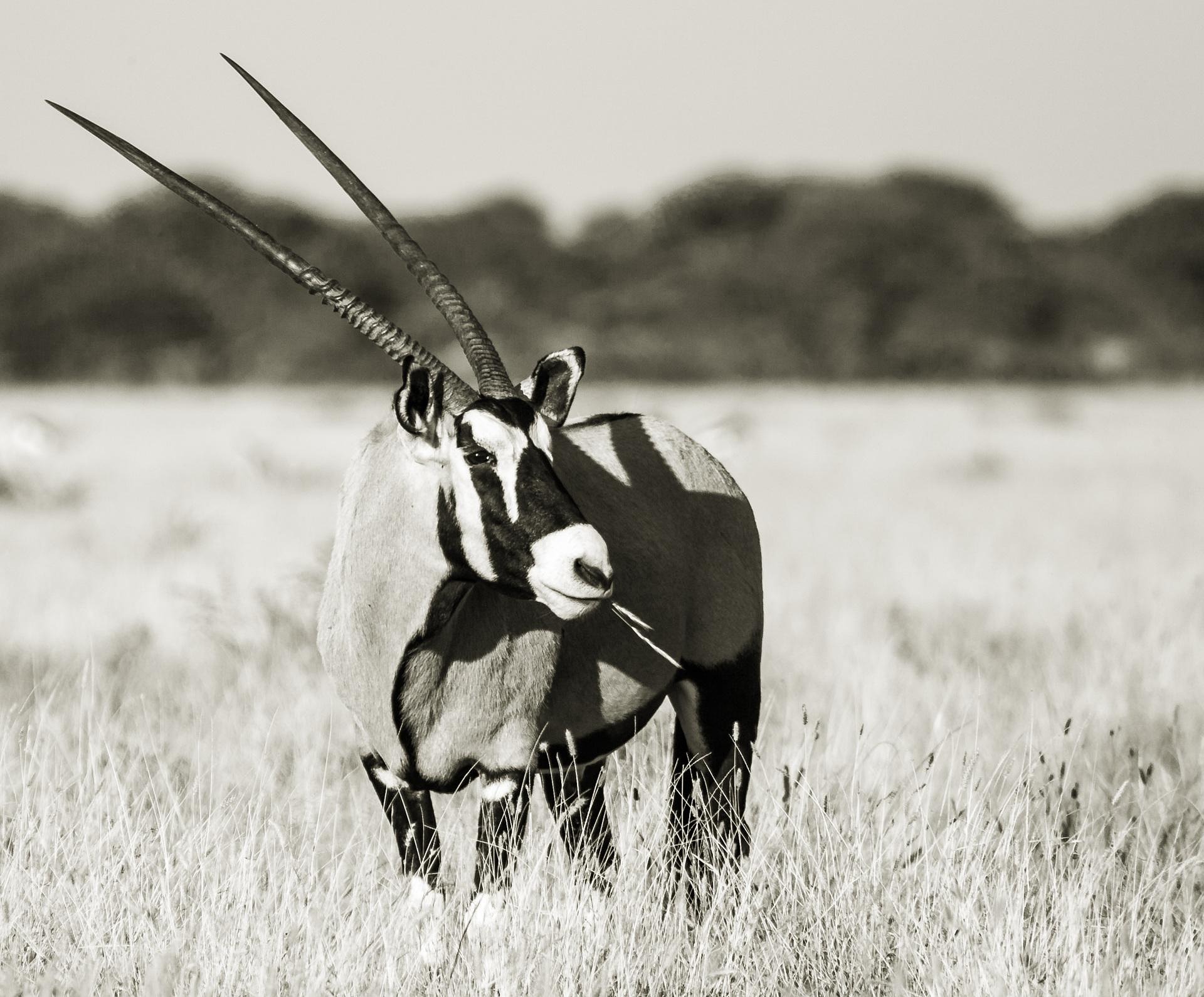
If lions are the kings, gemsbok (oryx) are the spirits of the Kalahari. These elegant antelope, with their striking black-and-white faces and long, rapier-like horns, are perfectly adapted to desert life. They can survive without water for weeks, extracting moisture from tsamma melons and desert tubers. Watching a herd of gemsbok move across the pale sands, their grey coats shimmering in the heat haze, feels like watching a mirage take form.
Brown Hyenas and Other Nocturnal Mysteries
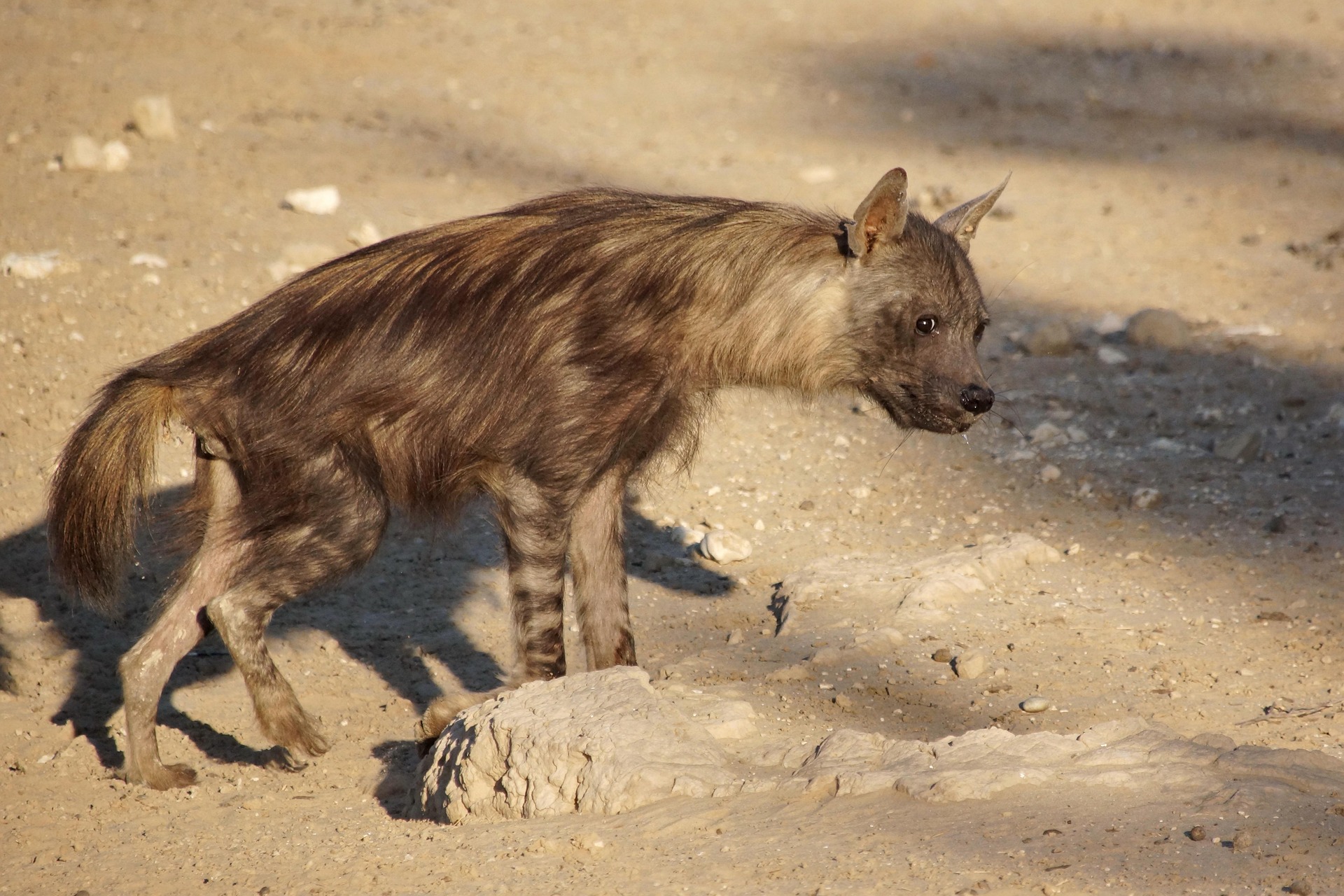
The Kalahari is one of the best places in Africa to see the elusive brown hyena. These shaggy, secretive creatures are primarily scavengers, and sightings are rare and magical. Night drives (offered in the private concessions) reveal a hidden world of aardwolves, bat-eared foxes, porcupines, and the occasional leopard. The Kalahari’s nocturnal life is rich, and its silence at night is broken by sounds that speak of ancient rhythms.
Birdlife: A Hidden Paradise
Over 200 bird species have been recorded in the reserve. In the wet season, the pans fill with flamingos, pelicans, and storks. The Kori bustard, the world’s heaviest flying bird stalks the grasslands. Secretary birds stride through the bush, hunting snakes. The pale chanting goshawk, the crimson-breasted shrike, and the sociable weaver (with its massive communal nests) add color and life to the vast landscape.
When to Visit Central Kalahari Game Reserve in 2026
Dry Season (May–October): The Classic Kalahari Safari
This is the season of stark beauty. The vegetation thins, the water sources shrink, and wildlife concentrates around Deception Valley, the Tau Pans, and the few permanent waterholes. Game viewing is exceptional, with predator sightings at their peak. Days are warm to hot; nights can be cold (sometimes near freezing in June and July). This is the best time for photography, with clear skies and dramatic light.
Green Season (November–April): The Kalahari in Bloom
When the summer rains arrive, the Kalahari transforms. The desert becomes a green grassland, scattered with wildflowers. The pans fill with water, attracting thousands of birds. This is calving season for springbok and gemsbok, and predators are active. The green season is also the best time for birdwatching, with migratory species arriving from Europe and North Africa. The heat can be intense (especially in October and November), but the landscape is breathtaking, and visitor numbers are very low.
The Sweet Spot (April & September–October)
April, when the rains are ending but the landscape is still green, offers a blend of beauty and good game viewing. September and October are the driest months, when wildlife is most concentrated and the famous Kalahari dust begins to rise but the heat can be formidable.
Where to Stay: Camps of the Central Kalahari
Accommodation in the Central Kalahari falls into two categories: the government-run campsites within the reserve (basic but authentic) and the private luxury camps in the surrounding concessions (where off-road driving and night drives are permitted).
Inside the Reserve: Wilderness Camping
The Central Kalahari Game Reserve offers a handful of designated campsites, including at Deception Valley, Passarge Valley, and Sunday Pan. These are true wilderness camps, no fences, no facilities beyond a pit toilet and a fireplace. You must be fully self-sufficient (water, food, fuel). This is for experienced self-drivers or those on guided mobile safaris. The reward: nights under a canopy of stars, with only the sounds of the Kalahari around you.
Private Concessions: Luxury in the Wild
On the edges of the reserve, private concessions offer exclusive camps with expert guides, comfortable accommodations, and activities not permitted inside the national park (such as night drives and off-road tracking). These camps provide the same isolation but with creature comforts. Guides in these concessions are among Botswana’s best, many have spent decades walking and driving these ancient lands.
How to Experience the Central Kalahari
Self-Drive Safari: For the Adventurous
For experienced safari-goers, self-driving the Central Kalahari is a bucket-list adventure. You’ll need a well-equipped 4×4 (with extra fuel, water, and supplies), satellite communication, and detailed maps. The reserve’s tracks are sandy and can be challenging. Permits must be obtained in advance from Botswana’s Department of Wildlife and National Parks. This is not a trip for beginners, but for those with experience, it offers unmatched freedom.
Guided Mobile Safari: The Perfect Balance
For most travelers, a guided mobile safari offers the best of both worlds: the wilderness experience of camping inside the reserve, with expert guides handling logistics, cooking, and tracking. Mobile safaris typically last 4-7 days, following the wildlife across the Kalahari. You sleep in comfortable tents, eat freshly prepared meals under the stars, and wake up where the animals are. This is the classic Kalahari experience.
Fly-in Safari: Remote Luxury
For those seeking exclusivity, fly-in safaris to the private concessions offer the ultimate convenience. Light aircraft fly you from Maun to remote camps, where you’ll spend days exploring the concession with expert guides. Night drives, walking safaris, and off-road tracking are permitted, offering a depth of experience not possible inside the reserve itself.
Why the Central Kalahari Matters in 2026
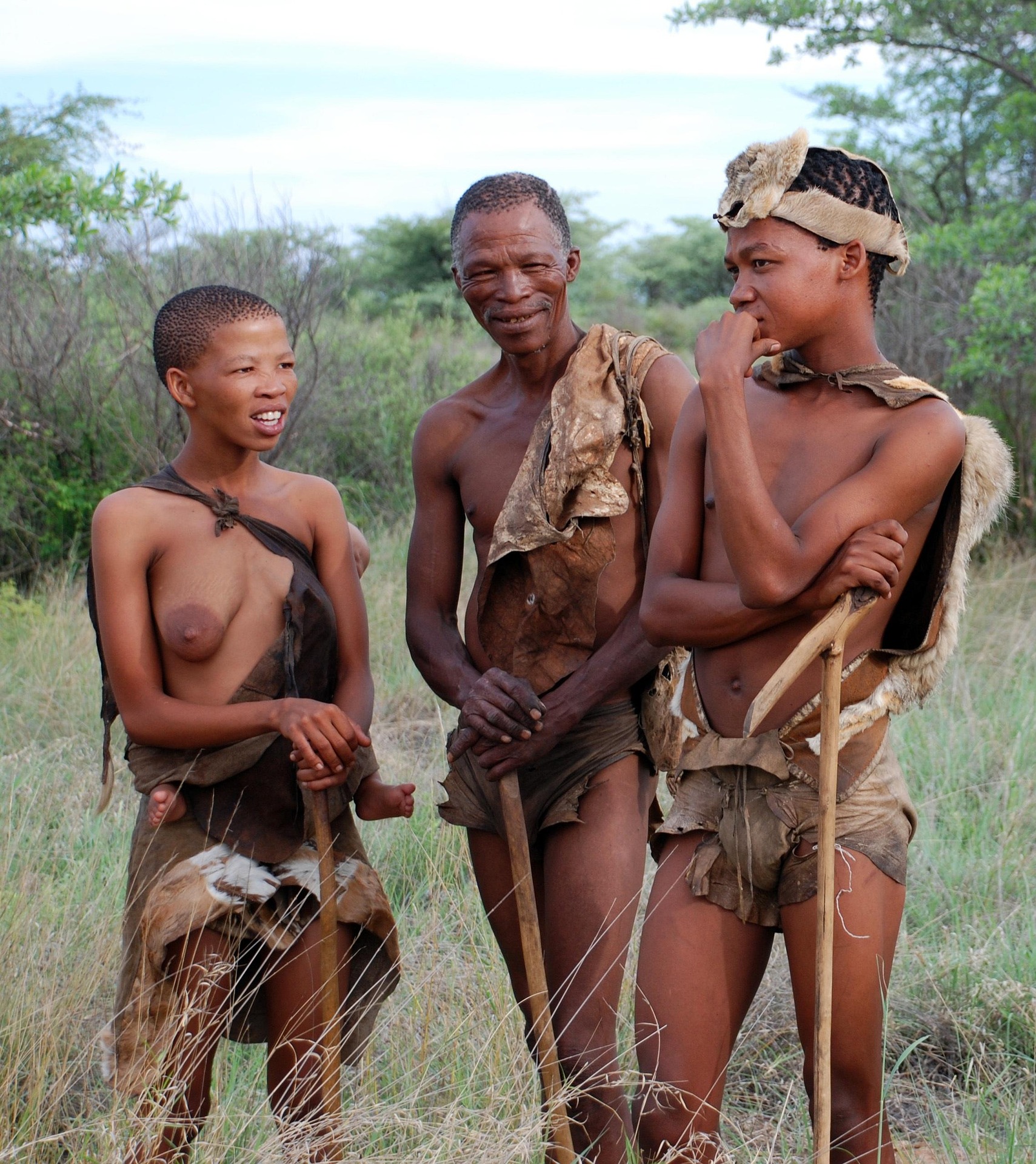
There is a reason the San people, the first inhabitants of the Kalahari called this land home for 20,000 years.
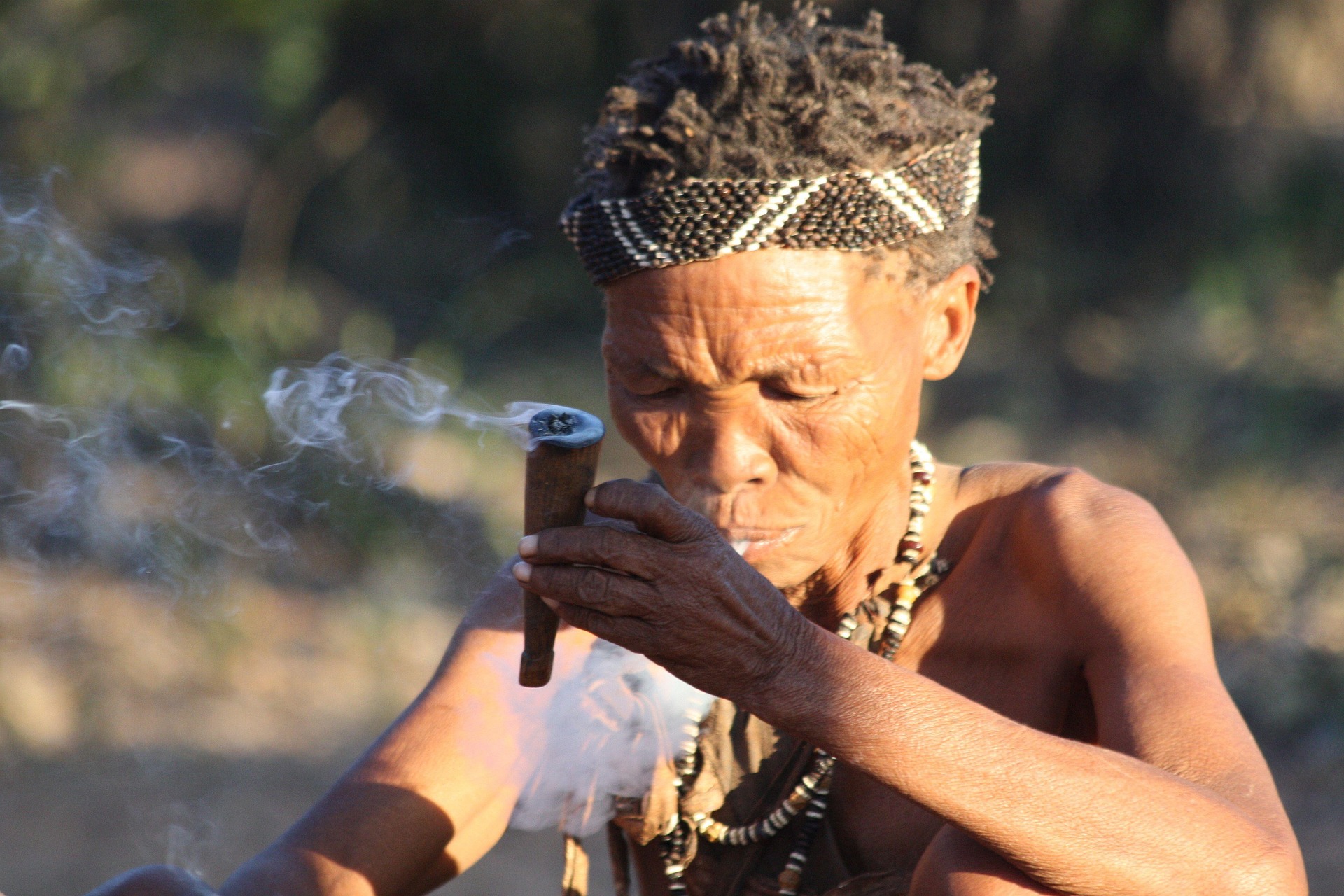
The Kalahari teaches patience. It teaches you to sit under a camelthorn tree and wait for the day to unfold. To read the stories written in the sand. To understand that silence is not empty, it is full of the sounds of life moving just out of sight.
In 2026, when the world feels crowded and loud, the Central Kalahari Game Reserve offers something increasingly rare: true solitude. A place where you can go for days without seeing another traveler. Where the only luxury is time, time to sit with a pride of lions as they rest in the shade of a acacia, time to watch the stars wheel overhead in a sky unpolluted by light, time to remember what it feels like to be still.
Practical Information for Your Kalahari Safari
Getting There: Most travelers fly into Maun (MUB) or Gaborone (GBE). From Maun, it’s a 3-4 hour drive to the reserve entrance (depending on road conditions). Mobile safaris and fly-in camps handle all transfers.
Permits: If self-driving, you must obtain permits in advance from the Department of Wildlife and National Parks in Gaborone or Maun. Permits are limited, especially during peak season.
Fuel and Supplies: There are no fuel stations inside the reserve. The last fuel is in Rakops, a small village near the entrance. Self-drivers must carry all fuel, water, and food for the duration of their stay.
Communication: Mobile phone service is nonexistent inside the reserve. Satellite phones or satellite messaging devices (like Garmin inReach) are essential for self-drivers.
What to Pack: Neutral-colored clothing, sturdy walking shoes, a warm jacket (nights can be cold even in summer), high-SPF sunscreen, a wide-brimmed hat, binoculars (essential), and a good camera. For self-drivers: spare fuel, at least 5 liters of water per person per day, food supplies, a reliable GPS, and paper maps as backup.
 For flights to Maun or Gaborone:
 Search flights to Maun (MUB) for your Kalahari adventure
Stay connected with satellite communication:
 Get a Botswana eSIM from Yesim (for coverage near towns)
Final Thoughts: The Kalahari Awaits
In the Central Kalahari Game Reserve, there are no lodges with infinity pools, no souvenir shops, no paved roads. There is only the land, and the life that has adapted to it over millennia. To visit is to become a part of that ancient rhythm, to wake with the sun, to track lions across fossilized dunes, to fall asleep to the distant roar of Africa’s most legendary predators.
This is not a safari for everyone. It is for those who understand that the deepest experiences often come without comfort. That the richest reward is not a photograph but a moment, the moment a black-maned lion lifts its head and looks directly at you, the moment you realize you are not a spectator but a visitor in its kingdom.
For 2026, if you’re ready for something real, something raw, untamed, and unforgettable, the Central Kalahari is waiting. Bring patience. Bring humility. And leave enough space in your heart for the silence to enter.
Make 2026 the year you answer the call of the Kalahari. The lions are roaming, the stars are bright, and the ancient heartbeat of Africa pulses beneath the sands.
Planning Resources for Your Botswana Journey
- Okavango Delta Travel Guide (2026) – Botswana’s watery wilderness.
- Chobe National Park Guide (2026) – Elephant capital of Africa.
- South Luangwa Guide (2026) – Zambia’s walking safari paradise.
- Serengeti vs Masai Mara Guide (2026) – East Africa’s great migration.
Have questions about planning a Central Kalahari safari? Drop them below — and if you’ve experienced the Kalahari, share your story with us.