Namibia Self-Drive Safari: The Ultimate 2026 Road Trip Guide – 4×4 Routes, Tips & Itineraries

Quick answer: Namibia is Africa’s best self-drive destination, a country where paved highways give way to gravel roads that lead to otherworldly landscapes, wildlife-rich parks, and complete solitude. With a reliable 4×4, a good map, and this guide, you can explore the world’s oldest desert, the tallest dunes, and the wildest coast on your own terms.
There is a feeling that comes with driving Namibia’s open roads. The tar ends, the gravel begins, and suddenly you are alone, just you, the red dust rising behind your wheels, and a landscape that stretches to the horizon in every direction. A herd of oryx watches from the roadside. A distant dust devil spins across the plains. The sun begins to set, and the sky turns colors you didn’t know existed.
This is self-drive Namibia. It is freedom. It is adventure. And it is more accessible than you think.
For 2026, if you’ve ever dreamed of exploring Africa at your own pace, stopping for photos whenever you want, staying as long as you like, sleeping under stars so bright they cast shadows, this guide is for you. It covers everything: choosing the right vehicle, planning your route, navigating gravel roads, packing essentials, and staying safe in remote areas.
Already planning your Namibia road trip? This guide pulls together all our destination articles Sossusvlei’s dunes, Swakopmund’s coast, and southern Namibia’s ghost towns and wild horses into one complete road trip.
Why Namibia is the Best Self-Drive Safari Destination in Africa
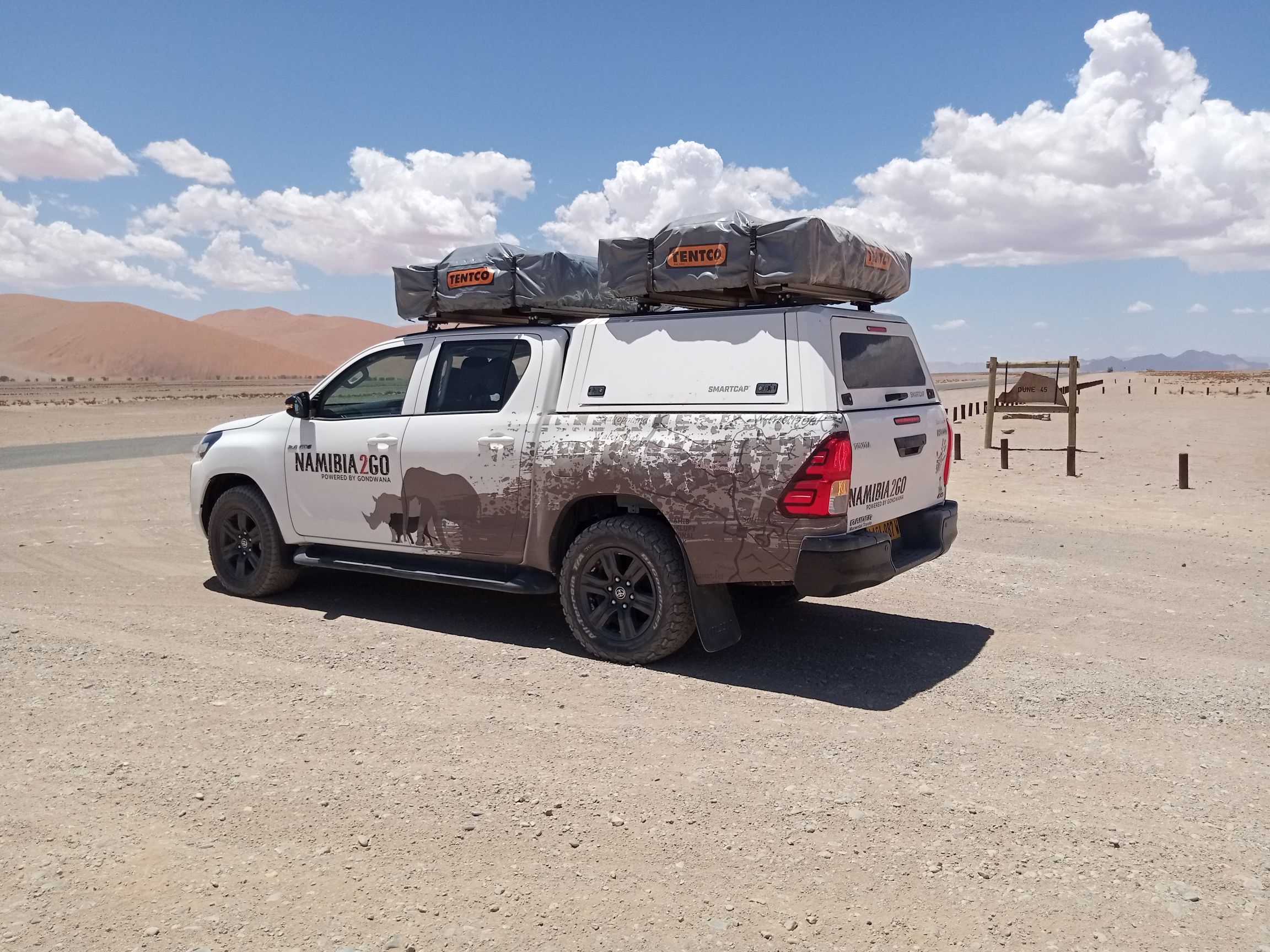
Unlike many African countries where self-driving is difficult or dangerous, Namibia was made for the road. Here’s why:
- Excellent roads: Namibia’s gravel roads are well-maintained. The main routes (B roads) are paved; most secondary roads (C roads) are good gravel passable with a standard sedan.
- Low traffic: Outside of major towns, you can drive for hours without seeing another vehicle.
- Well-marked signage: Namibia’s road signs are clear and reliable.
- Safe and stable: Namibia is one of Africa’s most politically stable and safe countries for travelers.
- Affordable: Compared to fly-in safaris, self-drive offers incredible value.
- Flexibility: Stop for wildlife, change your route, linger at a viewpoint, you’re in control.
For 2026, self-drive Namibia remains the ultimate way to experience the country’s vastness. You don’t need a tour operator. You just need a good vehicle, a sense of adventure, and this guide.
Choosing Your Vehicle: 4×4 vs. Standard Sedan
This is the most important decision for your trip. Here’s the honest breakdown:
4×4 with High Clearance (Recommended)
A proper 4×4 Toyota Hilux, Ford Ranger, Nissan Navara is ideal for Namibia. It allows you to:
- Drive the final 5 kilometers to Deadvlei (soft sand requires 4×4)
- Access remote areas of Etosha, Damaraland, and Kaokoland
- Navigate sandy tracks and rocky passes with confidence
- Carry extra fuel, water, and supplies on roof racks
- Sleep in a rooftop tent (if equipped)
Rental companies: Namibia 2Go, Bushlore, Asco Car Hire, Advanced Car Hire, Savanna Car Hire are reputable options. Book 3-6 months in advance for peak season (July-October).
Standard Sedan (Possible but Limited)
You can drive most paved roads and many gravel roads in a standard sedan (Toyota Corolla, VW Polo, etc.). However, you will be restricted:
- No access to Deadvlei (the last 5km requires 4×4)
- No access to remote areas of Etosha, Damaraland, or Kaokoland
- Higher risk of punctures on gravel (sedans have low-profile tires)
- Less comfortable on rough corrugations
Verdict: If you plan to stay on main routes and skip Deadvlei and remote parks, a sedan works. But for the full Namibia experience, spend the extra on a 4×4. It’s worth every dollar.
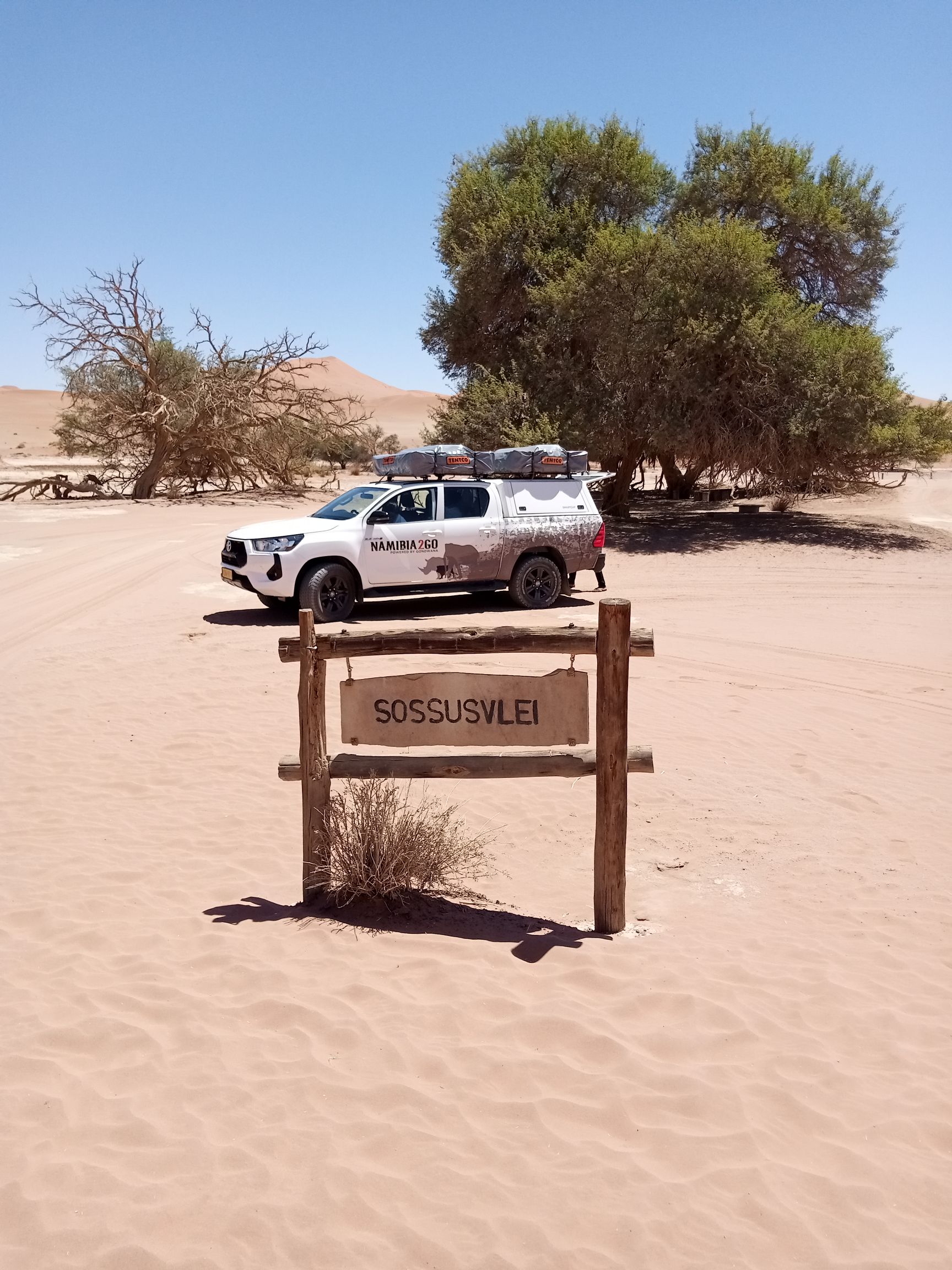
Essential Vehicle Equipment for a Namibia Self-Drive
When you pick up your 4×4, ensure it includes (or you bring):
- Two spare tires: Namibia’s gravel roads are notorious for punctures. Two spares are standard with reputable rental companies.
- Tire pressure gauge and compressor: You’ll need to lower tire pressure on gravel (recommended 1.6-1.8 bar) and reinflate on tar (2.2 bar).
- Jack and wheel spanner: Know how to change a tire before you go.
- Recovery tracks and tow rope: For sand driving (especially around Sossusvlei).
- GPS or offline maps: Tracks4Africa is the gold standard. Download maps to your phone as backup.
- Paper map: Never rely solely on electronics. A good paper map is essential.
- Satellite phone or Garmin inReach: For remote areas (Kaokoland, Skeleton Coast). Most travelers don’t need this, but for extended remote trips, it’s wise.
- 12V charger and power bank: Keep devices charged.
Sample Namibia Self-Drive Itineraries for 2026
Here are three classic routes, ranging from 10 days to 3 weeks. Each links to our detailed destination guides.
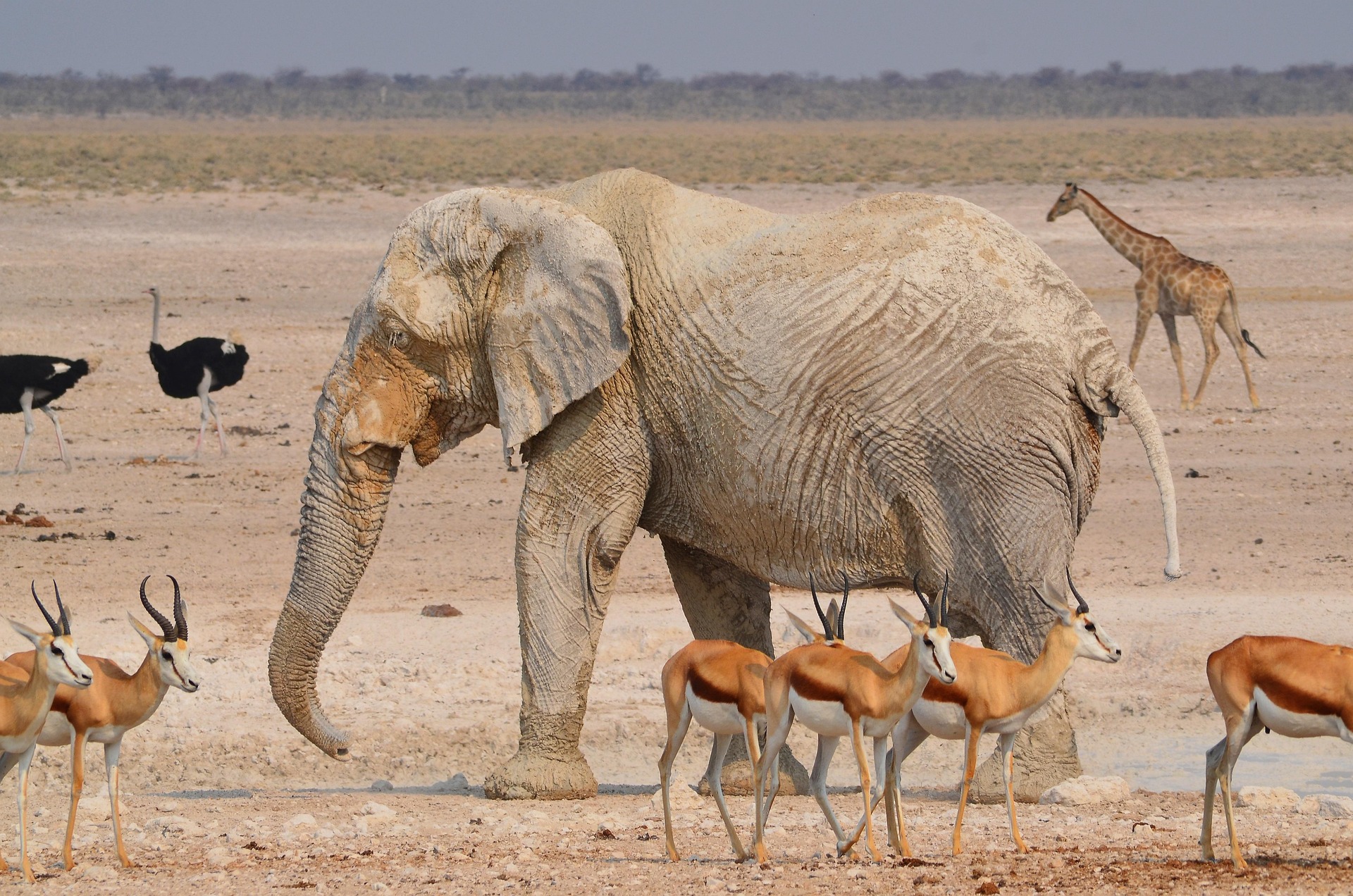
10-Day Classic Namibia (Windhoek → Sossusvlei → Swakopmund → Etosha → Windhoek)
Days 1-2: Windhoek
Arrive, pick up your 4×4, stock up on supplies. Explore the capital’s German-colonial architecture, craft markets, and restaurants.
Days 3-4: Sossusvlei (5-6 hours south)
Drive to Sesriem. Wake before dawn to climb Dune 45 and explore Deadvlei. Stay inside the park at Sesriem Campsite for sunrise access. Full Sossusvlei guide here.
Days 5-6: Swakopmund (5 hours northwest)
Drive through the Kuiseb Pass to the coast. Sandboard, quad bike, kayak with seals at Walvis Bay, and explore the Skeleton Coast. Full Swakopmund guide here.
Days 7-8: Etosha National Park (6-7 hours north)
Drive via Karibib and Outjo. Spend two days game driving around Etosha’s famous waterholes. Stay at Okaukuejo Camp for the floodlit waterhole. Full Etosha guide (coming soon).
Days 9-10: Return to Windhoek (5-6 hours south)
Drive back via Okahandja, stopping at the wood carving market. Depart.
14-Day Southern Namibia Deep Dive (Windhoek → Sossusvlei → Lüderitz → Kolmanskop → Aus → Windhoek)
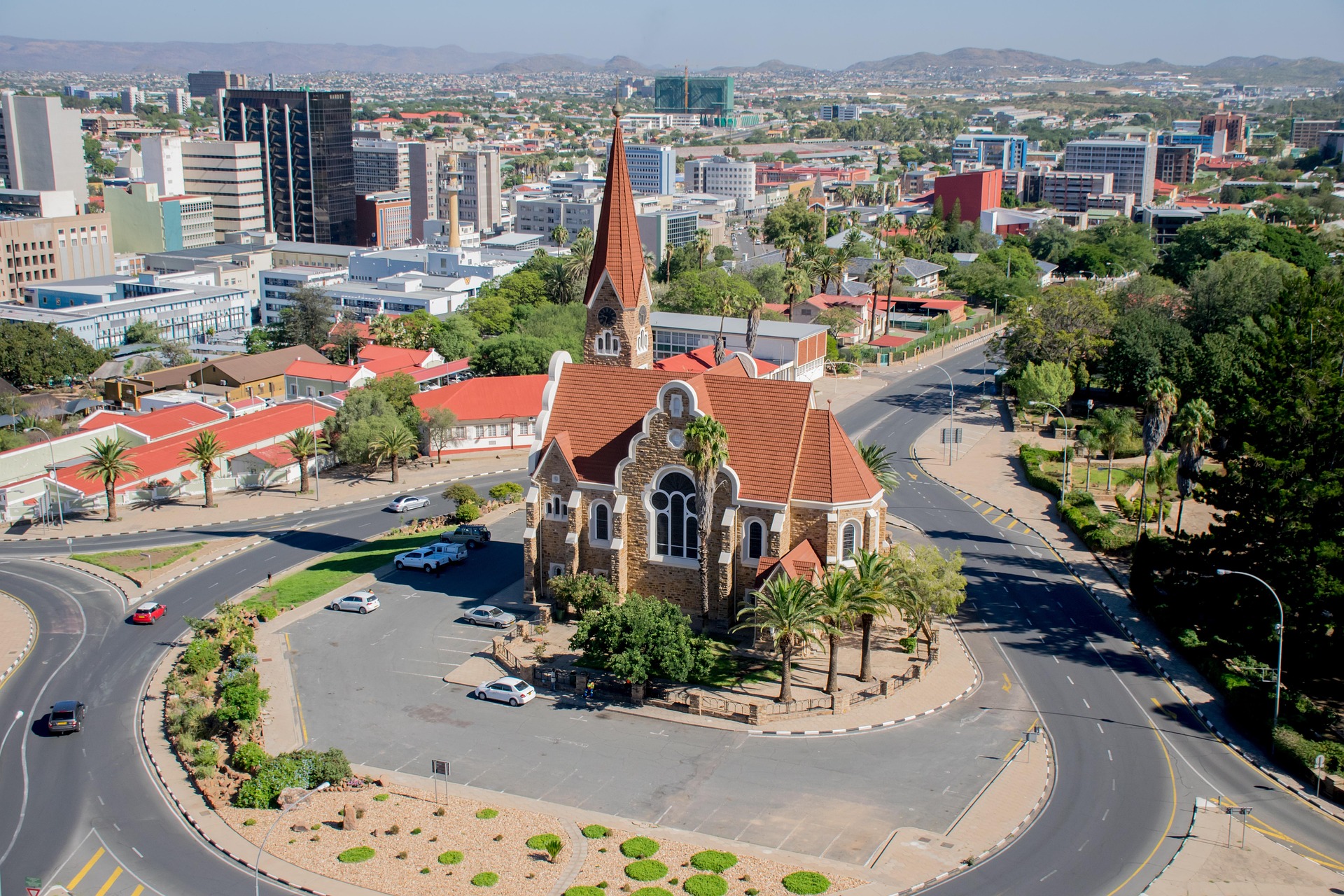
Perfect for travelers who want ghost towns, wild horses, and desert landscapes.
Days 1-2: Windhoek
Arrive, prepare.
Days 3-4: Sossusvlei
As above.
Days 5-7: Lüderitz & Kolmanskop (5-6 hours south)
Drive via the C27 and B4. Explore the ghost town of Kolmanskop, the German-colonial architecture of Lüderitz, and the haunting Shark Island. Full Kolmanskop & Lüderitz guide here.
Days 8-9: Aus & the Wild Horses (2 hours east)
Drive to Aus. Visit the Garub waterhole at dawn or dusk to see the wild horses. Stay at the Desert Horse Inn or camp nearby.
Days 10-11: Fish River Canyon (4-5 hours south)
Drive to the Fish River Canyon (the world’s second largest canyon). Hike the rim at sunrise. Overnight at the Canyon Lodge or Hobas Camp.
Days 12-14: Return to Windhoek (8-9 hours north)
Drive via Keetmanshoop and Mariental. Depart.
21-Day Ultimate Namibia (Complete Circuit)
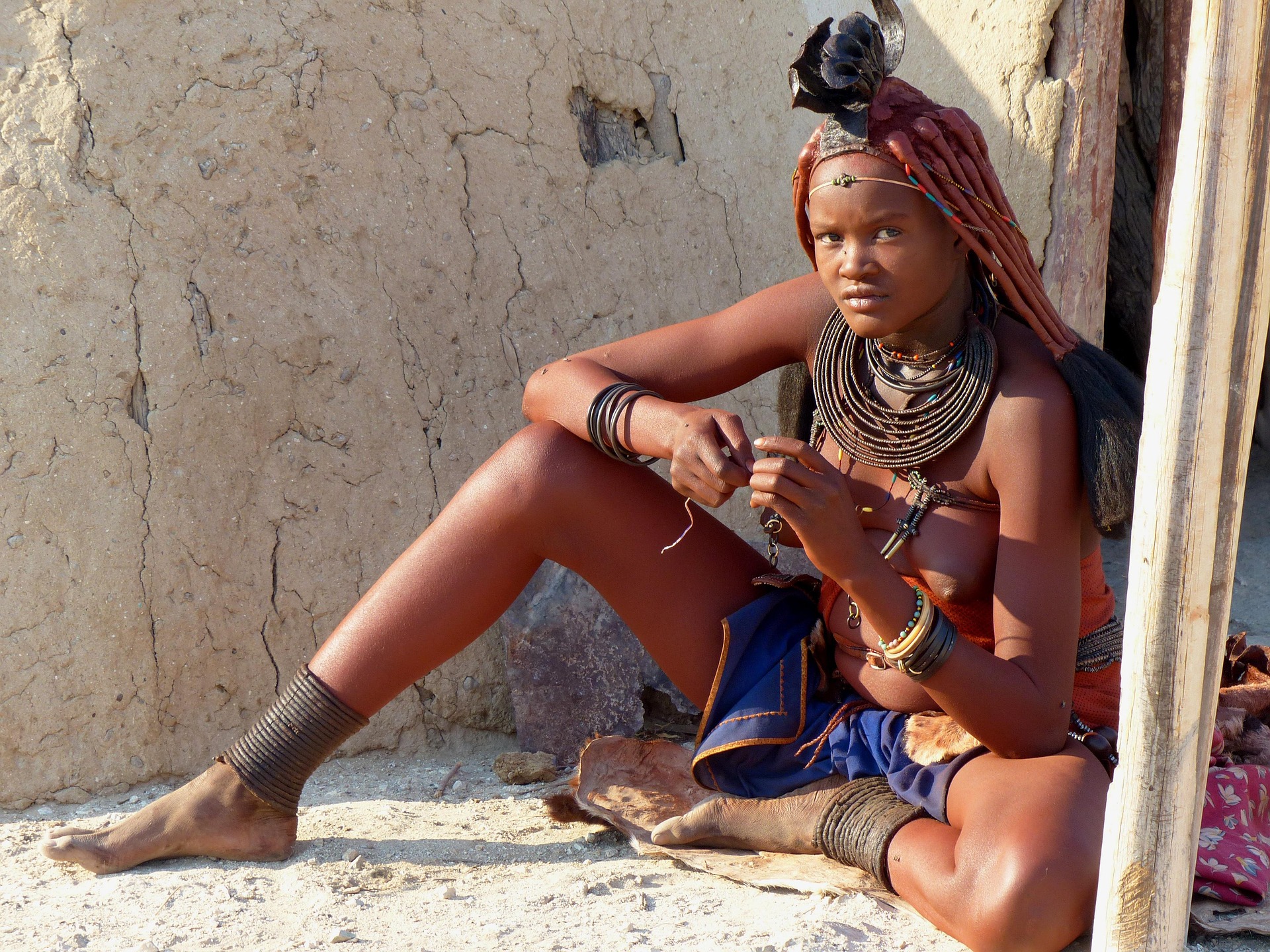
Combine the classic route with southern Namibia, plus Damaraland and the remote Kaokoland (requires serious 4×4 experience and satellite communication). This is for experienced self-drivers only.
- Windhoek → Sossusvlei → Swakopmund → Skeleton Coast → Damaraland (rock art, desert elephants) → Etosha → Kaokoland (remote, challenging) → Kunene River → Epupa Falls → Caprivi Strip (Zambezi Region)→ return via Gaborone (Botswana) or Windhoek.
This route requires at least 3 weeks, a fully equipped 4×4, and self-sufficiency. Not for first-timers, but unforgettable for those with experience.
Driving Tips for Namibia’s Gravel Roads
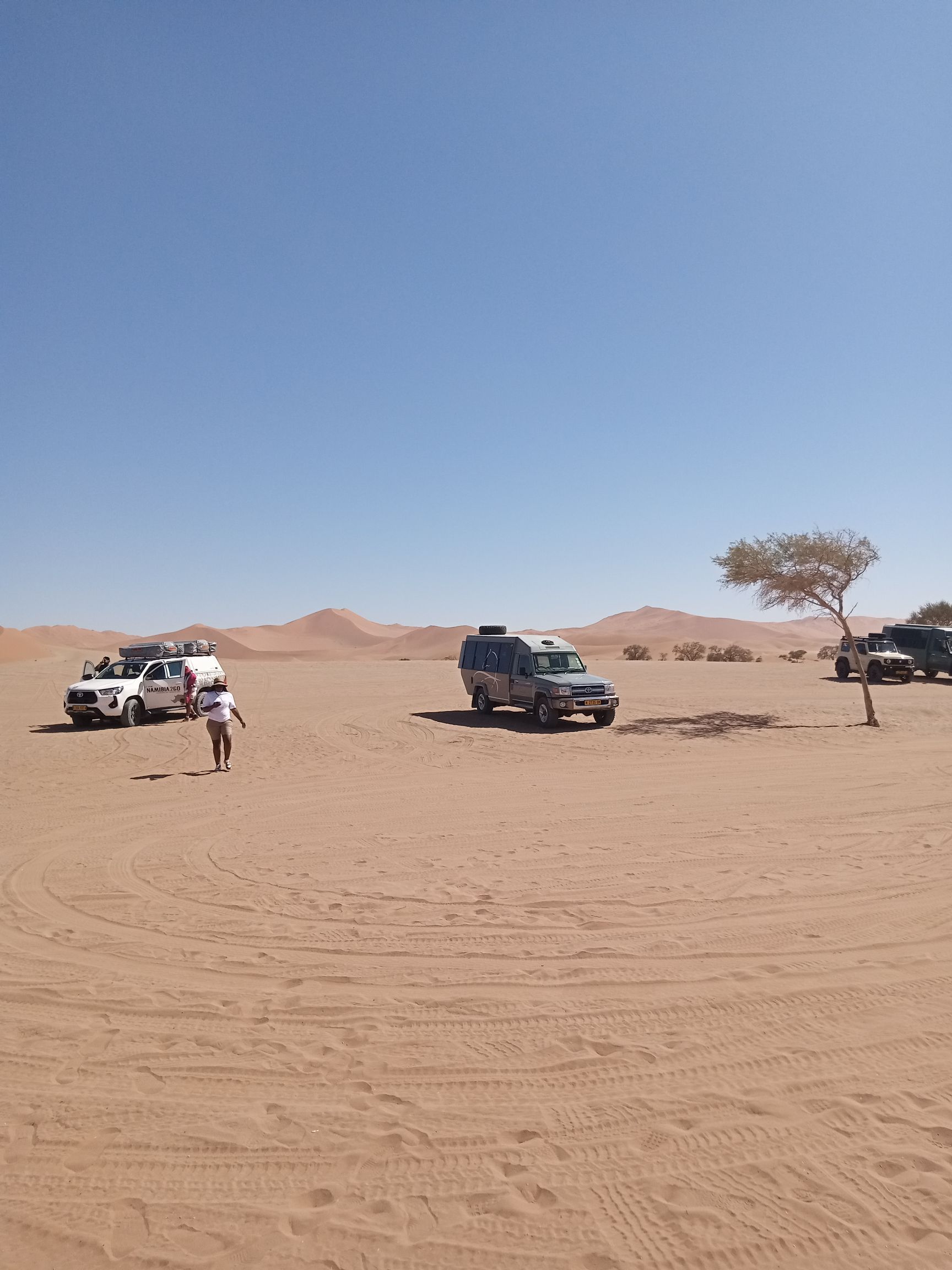
Gravel roads are Namibia’s arteries. Most are good, but they demand respect.
- Lower tire pressure: Reduce to 1.6-1.8 bar on gravel. This reduces puncture risk and improves comfort.
- Reduce speed: 60-80 km/h is safe on most gravel. 100 km/h is dangerous. Corrugations can cause loss of control.
- Beware of blind crests: On narrow gravel roads, slow down at crests. Other vehicles (or wildlife) may be just beyond.
- Watch for oncoming vehicles: Gravel roads create a dust cloud. If you see dust ahead, slow down and prepare to pull left.
- Be cautious after rain: Gravel roads become slippery. If wet, reduce speed significantly. Some roads may close.
- Check tires daily: Look for cuts, embedded stones, or slow leaks. Punctures are common, be prepared.
- Carry extra water: If you get stuck or have a breakdown, water is your priority.
Driving at Night
Avoid night driving. Wildlife (oryx, springbok, warthogs, even elephants) are active on and near roads after dark. They are hard to see and often stand still in the road. Plan to be at your accommodation by sunset.
Fuel, Supplies & Navigation
Fuel
Fuel stations are available in all towns, but distances between them can be long. Plan ahead:
- Carry extra fuel if driving remote routes (Damaraland, Kaokoland, Skeleton Coast).
- Fuel is available in: Windhoek, Solitaire, Sesriem, Walvis Bay, Swakopmund, Henties Bay, Outjo, Okaukuejo (Etosha), Tsumeb, Keetmanshoop, Lüderitz, Aus.
- Credit cards work at most stations, but carry cash for remote pumps.
Water & Food
- Carry at least 5 liters of drinking water per person per day (more in summer).
- Stock up on non-perishable food in Windhoek or major towns. Small towns have basic shops.
- Most campsites and lodges have restaurants or self-catering facilities.
Navigation
- Tracks4Africa: The best GPS map for Namibia. Available on Garmin devices or as a smartphone app. Includes campsites, fuel, water points, road conditions.
- Google Maps offline: Download offline maps for Namibia before you go. Works well on main roads but unreliable in remote areas.
- Paper map: The Namibia Road Atlas or Reise Know-How map are excellent backups.
Packing List for a Namibia Self-Drive Safari
Essential Gear
 Passport, visa, driver’s license (international permit recommended)
 Credit cards, cash (Namibian Dollars or South African Rand, they are 1:1)
 Copies of rental agreement, insurance, important documents
 Phone with Tracks4Africa or offline maps
 Camera with extra batteries and memory cards
 Binoculars (essential for wildlife viewing)
Camping Gear (if camping)
 Tent (rooftop or ground)
 Sleeping bag (rated to 0°C ,nights can be cold even in summer)
 Sleeping pad or mattress
 Camping stove, fuel, pots, utensils, plates, cups
 Cooler box (ice is available at most fuel stations)
 Headlamp or flashlight (plus extra batteries)
Clothing
 Lightweight, neutral-colored shirts (long sleeve for sun protection)
 Long pants (khaki, beige, olive, avoid dark colors that attract flies)
 Warm jacket (mornings and nights can be near freezing, especially June-August)
 Windbreaker (the coast is windy)
 Wide-brimmed hat
 Sturdy walking shoes (for dunes, canyons, and walking safaris)
 Swimwear (some lodges have pools)
Health & Safety
 Sunscreen (high SPF, reapply frequently)
 Insect repellent (malaria risk in northern Namibia, consult your doctor)
 Basic first aid kit (plasters, antiseptic, pain relief, anti-diarrhea, rehydration salts)
 Water purification tablets or filter (backup for remote areas)
 Lip balm with SPF (the dry air cracks lips)
Vehicle & Navigation
- Tracks4Africa or offline maps downloaded
 Paper map backup
 Tire pressure gauge and compressor
 Knowledge of how to change a tire
 12V charger and power bank
Accommodation: Campsites, Lodges & Booking Tips
Namibia offers everything from basic campsites to luxury lodges. For self-drivers, campsites are often the best option they are affordable, well-located, and offer a true wilderness experience.
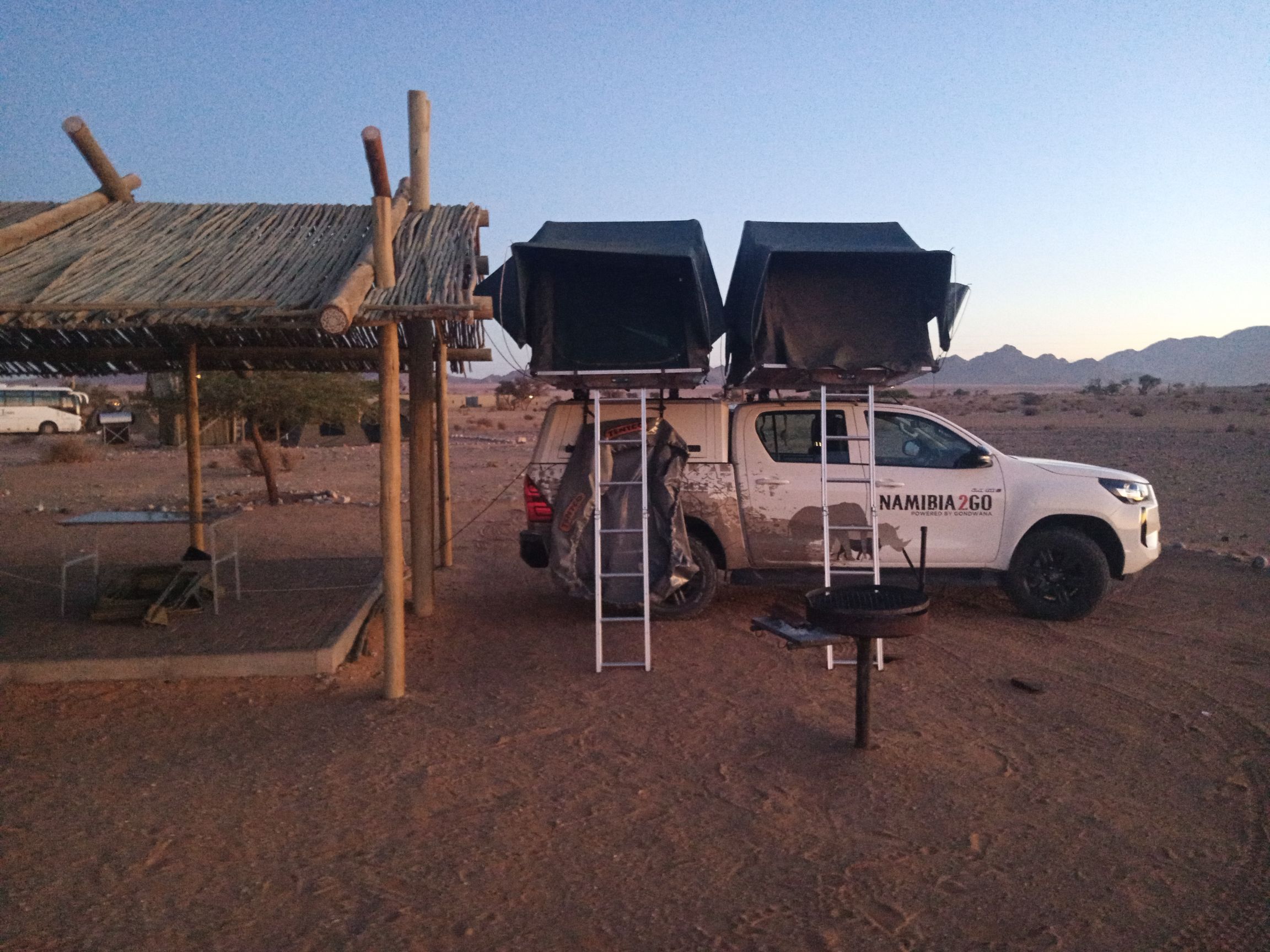
Popular campsites:
- Sesriem Campsite (Sossusvlei): Inside the park. Allows sunrise access before the gate opens. Book months in advance.
- Okaukuejo (Etosha): Famous floodlit waterhole. Book well ahead for peak season.
- Halali (Etosha): Central location, good waterhole.
- Namutoni (Etosha): Eastern side, historic fort.
- Spitzkoppe Campsite: Communal campsites among dramatic granite peaks.
- White Lady Campsite (Brandberg): Near ancient rock art.
Booking: For peak season (July-October), book campsites 6-12 months in advance. For lodges, book even earlier. NWR (Namibia Wildlife Resorts) handles many campsites, their online booking system is functional but slow.
Safety, Health & Practical Information
Is Namibia safe for self-drive? Yes. Namibia is one of Africa’s safest countries for travelers. Violent crime against tourists is rare. Use common sense: lock your vehicle, don’t leave valuables visible, avoid walking alone in cities after dark.
Road safety: The main risks are punctures, wildlife on roads at night, and driving too fast on gravel. Follow the tips above, and you’ll be fine.
Malaria: Present in northern Namibia (Etosha, Caprivi, Kaokoland) during summer (November-May). Consult your doctor about prophylaxis. Use repellent, wear long sleeves at dusk, and sleep under nets if provided.
Water: Tap water is safe in Windhoek and major towns. In remote areas, drink bottled or filtered water.
Internet & Connectivity: Mobile coverage is good in towns and along main roads. Remote areas have no signal. For extended remote trips, consider a satellite messenger (Garmin inReach).
Electricity: 220V, South African plugs (three round pins). Bring an adapter.
Sample Budget for a Namibia Self-Drive Safari (2026)
Costs are in Namibian Dollars (N$). Approximate daily costs per person (two sharing):
- 4×4 rental: N$1,200-2,500 per day (depending on season and vehicle)
- Fuel: N$2,000-3,000 for a 2,000km route
- Campsite: N$200-400 per person
- Mid-range lodge: N$1,500-3,000 per person
- Food (self-catering): N$150-250 per day
- Park entry fees: N$100-300 per person per day (Etosha, Sossusvlei, etc.)
Total estimated daily budget (self-catering, camping, 4×4 rental): N$1,800-2,500 per person per day.
Mid-range (lodges, some self-catering): N$3,500-5,000 per person per day.
Common Questions About Self-Drive Namibia
Do I need a 4×4 for Namibia?
For the classic route (Windhoek, Sossusvlei, Swakopmund, Etosha), a sedan works on main gravel roads. But you will miss Deadvlei (requires 4×4 for last 5km) and some remote areas. A 4×4 is recommended for the full experience.
Can I self-drive to Sossusvlei?
Yes. The roads are good gravel. The final 5km to Deadvlei requires 4×4 or a shuttle (available at the parking area).
Is it safe to self-drive in Namibia alone?
Solo self-drive is possible but more challenging. Namibia’s distances are vast, and if you have a breakdown, you may be alone for hours. Travel with at least one other person if possible.
What is the best time of year for a self-drive safari?
May-October (dry season) offers the best weather and wildlife viewing. November-April (green season) offers lower prices, fewer tourists, and lush landscapes but higher temperatures.
How long do I need for a Namibia self-drive?
Minimum 10 days for a rushed circuit. 14-21 days is ideal for a relaxed pace.
Why a Self-Drive Safari Matters in 2026
There is a reason Namibia’s self-drive culture endures. It is not the easiest way to travel. It requires planning, patience, and a willingness to embrace uncertainty. But it offers something no tour can: freedom.
The freedom to stop for a herd of oryx crossing the road. The freedom to wake at 4am and drive into Sossusvlei before sunrise, alone in the dunes. The freedom to change your route because you heard about a hidden campsite from a stranger at a fuel station. The freedom to sit on the roof of your 4×4 in the middle of nowhere and watch the Milky Way spill across a sky untouched by light.
For 2026, as travelers seek deeper, more authentic experiences, self-drive Namibia delivers. It asks for your effort and rewards you with moments that no guidebook can capture.
Final Thoughts: Your Namibia Road Trip Awaits
The gravel roads of Namibia have a way of getting under your skin. The red dust coats everything, your clothes, your vehicle, your memories. You will remember the feeling of a flat tire changed under a hot sun, the taste of dust on your lips, the sound of silence at a remote campsite.
You will also remember the sunrise over Dune 45, the elephant at Okaukuejo’s waterhole, the wild horses of Garub appearing from the heat haze, the rusted shipwreck on the Skeleton Coast. These are the moments that make the flat tires and the long drives worth it.
Make 2026 the year you take the wheel in Namibia. The roads are waiting.
Planning Resources for Your Namibia Self-Drive Safari
- Sossusvlei & Deadvlei Guide (2026) – Namibia’s iconic desert dunes.
- Swakopmund & Skeleton Coast Guide (2026) – Where desert meets ocean.
- Kolmanskop, Lüderitz & Wild Horses Guide (2026) – Southern Namibia’s ghost towns and desert spirits.
Have questions about planning your Namibia self-drive safari? Drop them below and if you’ve driven Namibia’s roads, share your tips with fellow travelers.